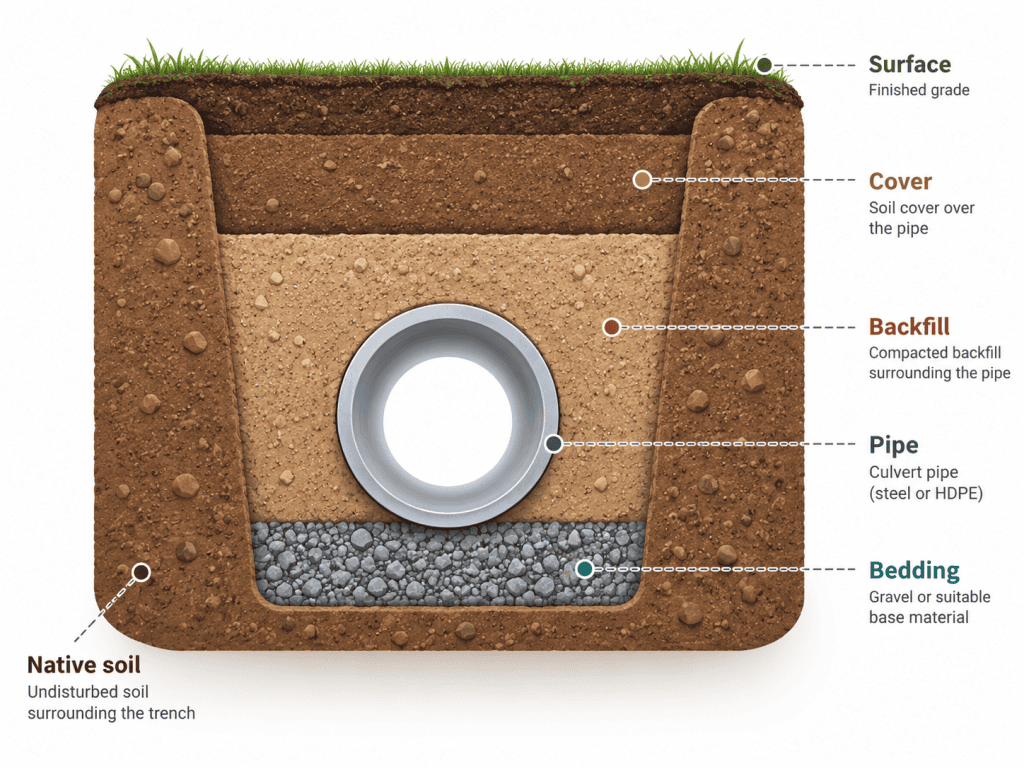
Below are general guidelines for a successful culvert installation. These apply to both steel and HDPE culvert pipe.
1. Proper Sizing
Choose a culvert diameter large enough to handle peak water flow for your site. Undersized pipe is one of the most common causes of driveway washouts in Oklahoma. If you're unsure what size you need, check your local drainage requirements or contact us for guidance.
2. Site Preparation
- Clear debris and vegetation from the installation area.
- Excavate a trench wide enough to allow proper backfilling around the pipe.
- Ensure a stable, level base before placing the pipe.
3. Establish Proper Slope
The pipe should follow the natural flow of water with a slight downward grade for efficient drainage. Avoid flat or reverse slopes.
4. Bedding Material
Place gravel or another suitable base material under the pipe to provide support and prevent shifting over time.
5. Backfilling
- Backfill evenly on both sides of the pipe.
- Compact material in layers to prevent settling.
- Keep large rocks away from direct contact with the pipe.
6. Cover Requirements
Make sure there's adequate soil cover over the culvert, especially in high-traffic areas. Steel culverts used in roadway crossings may need a specific minimum depth based on load requirements.
7. Headwalls or End Treatments
Consider headwalls, flared ends, or other erosion control measures at the pipe's entrance and exit to protect against washout.